Planning air freight movement across mid-mile aviation networks
Client
Mid-Mile Air Freight Planning System
Year
2023-2024
“United Parcel Services partnered with Locus to modernize their Next Generation Freight Forwarding Services (NGFS) operations. Over a 45-day implementation sprint, we designed and deployed a mid-mile air freight planning and execution system capable of managing dynamic shipment routing, container consolidation, and operational exception handling across a global aviation logistics network.”
Global parcel carriers rely on tightly coordinated aviation networks to move shipments between regional hubs, sort centers, and distribution facilities. These mid-mile transportation layers are responsible for moving high volumes of parcels across long distances within strict service-level timelines.
In this project, I worked on designing a mid-mile air freight planning system that optimizes how masterbills move across aviation logistics networks connecting fulfillment nodes, regional hubs, and airport gateways.
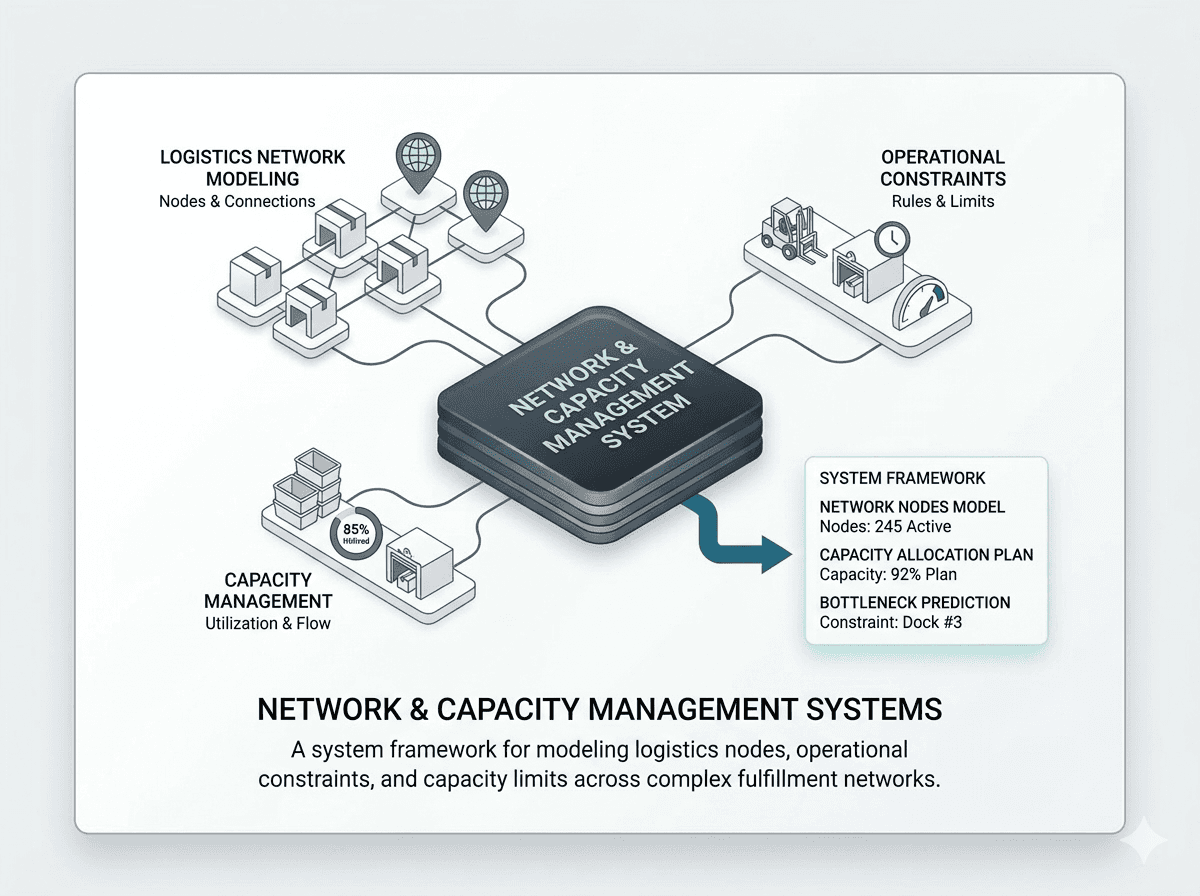
The system models the air logistics network as a set of interconnected nodes — including fulfillment centers, regional sort hubs, airport gateways, and destination facilities — linked through scheduled aviation lanes. Each lane represents a flight connection with defined departure schedules, aircraft capacity, and service constraints.
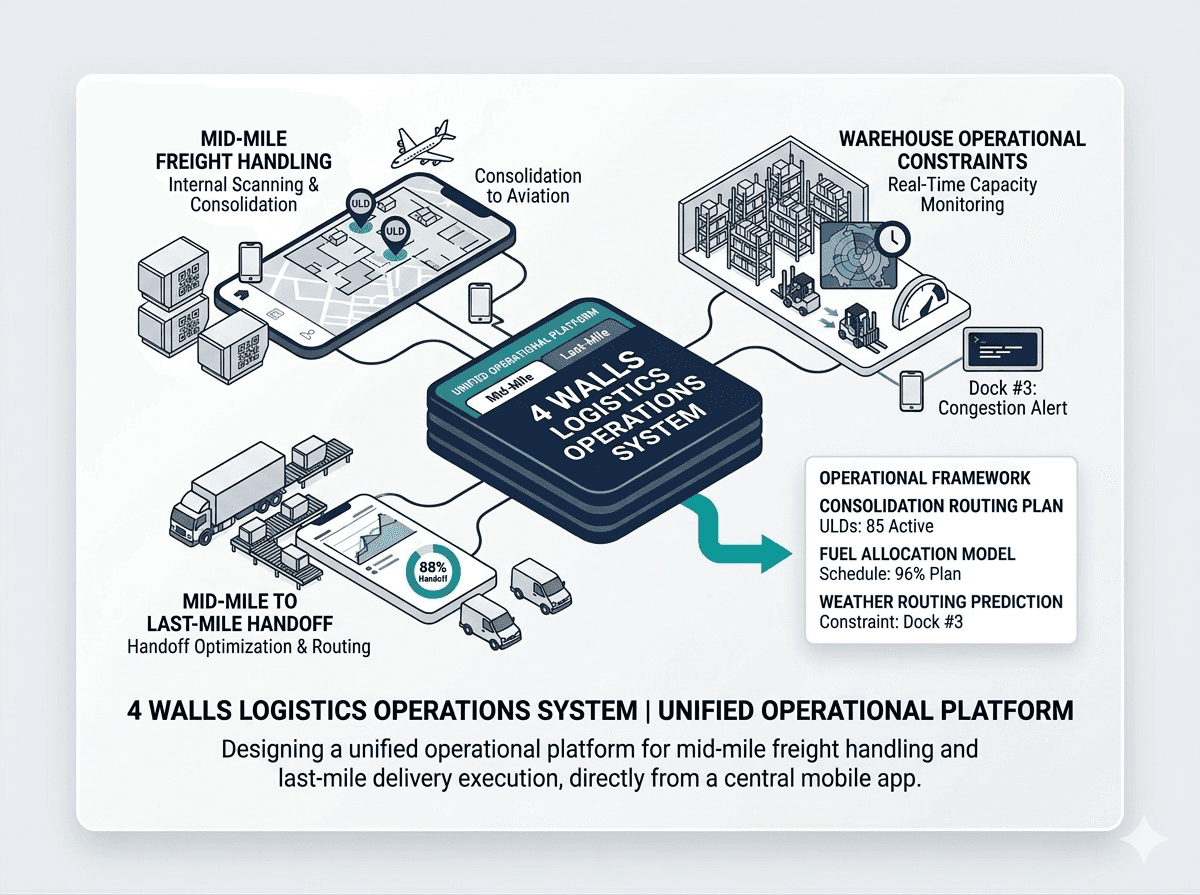
A core component of the platform is masterbill planning, where shipments are grouped into consolidated air freight loads that move through the aviation network. The system evaluates feasible routing paths for these masterbills based on flight schedules, connection windows, aircraft capacity, and operational cutoffs.
The planning engine enables logistics operators to determine how shipments should be routed through the network to ensure timely movement while maximizing aircraft utilization. By simulating shipment flows across available aviation routes, the system helps planners identify optimal paths, reduce transit delays, and maintain reliable mid-mile connectivity across the logistics network.
This platform plays a critical role in ensuring that air freight movements remain synchronized with downstream ground operations, enabling parcel carriers to maintain consistent delivery commitments across large geographic regions.
Scope of Work
Managing dynamic shipment operations across the air freight network
Air freight operations are highly dynamic. Shipments frequently need to be added to containers, removed from flights, or transferred across routes due to operational constraints such as flight delays, capacity changes, or routing updates.
Before this system was built, these operations were handled through fragmented workflows across multiple tools, increasing the risk of shipment mismatches and operational delays.
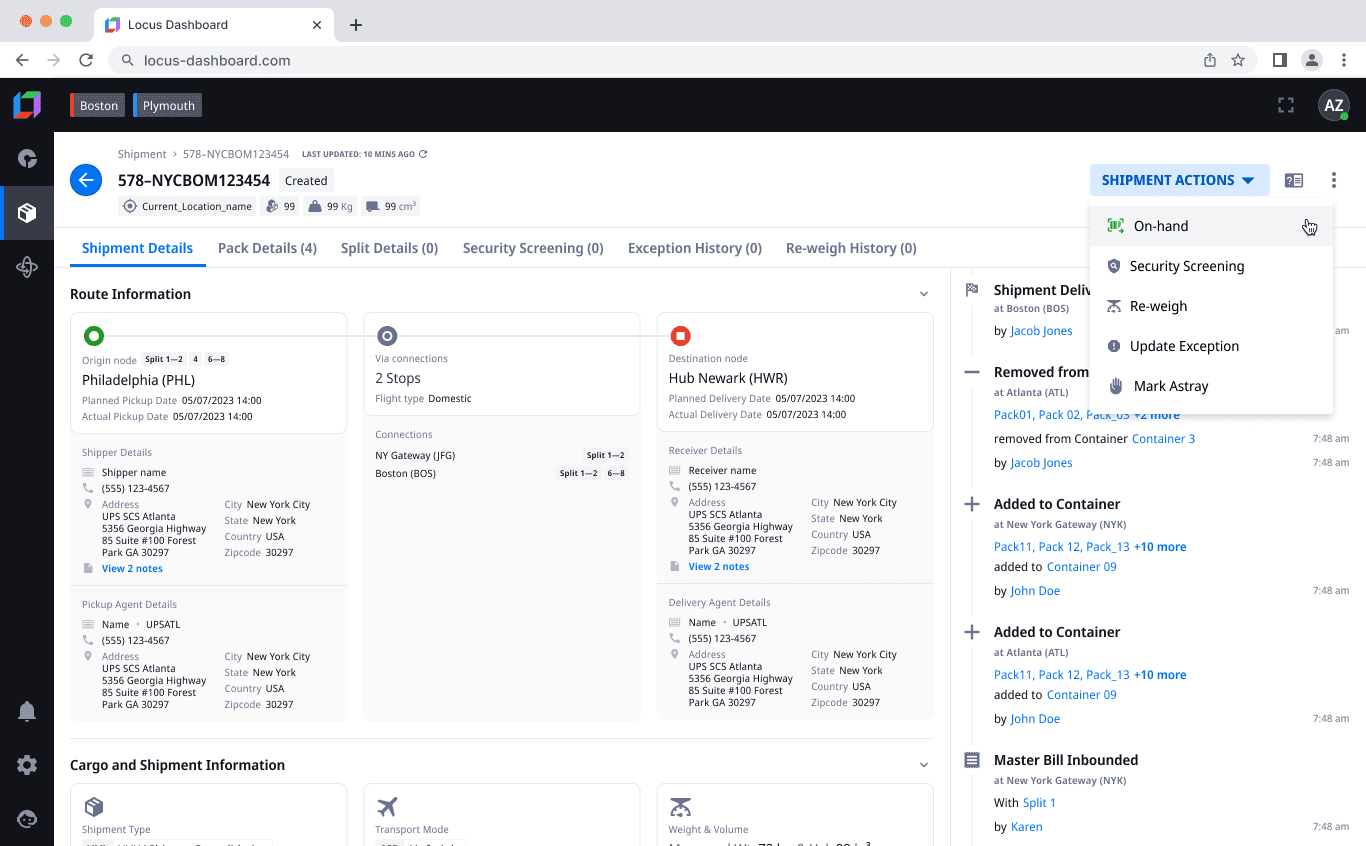
To address this, we designed a unified Shipment Action framework that allowed operations teams to manage shipment lifecycle events directly within the platform. Operators could perform key actions such as on-hand processing, security screening, re-weighing, updating exceptions, or marking shipments as astray, all from a centralized interface.
By consolidating shipment actions into a single operational workflow, the system enabled faster operational decisions while maintaining full traceability of each shipment’s state within the logistics network.