Designing scalable logistics networks through capacity and flow modeling
Client
Network & Capacity Planning
Year
2025-2026
Modern logistics networks operate across hundreds of facilities, transport lanes, and fulfillment flows. Designing such systems requires balancing capacity constraints, transportation availability, and operational throughput while maintaining service-level commitments.
In this project, I designed a network and capacity planning framework to model how orders move through a logistics system — from inventory nodes to sorting centers and last-mile hubs. The goal was to create a scalable planning model that could help operations teams evaluate network utilization, identify bottlenecks, and determine how infrastructure should evolve as order volumes grow.
The system models the logistics network as a set of nodes and transportation lanes, each with defined operational characteristics such as processing capacity, dispatch schedules, transit time, and handling constraints. By simulating order flow across this network, the framework allows planners to evaluate how changes in demand, infrastructure, or routing strategies affect the overall system.
The planning model also incorporates capacity utilization and operational buffers, ensuring that projected demand can be fulfilled without exceeding the processing limits of warehouses, sort centers, or last-mile hubs. This enables more informed decisions around infrastructure expansion, facility placement, and route configuration.
By combining operational research principles with system design thinking, this framework helps transform logistics planning from a static infrastructure problem into a dynamic, data-driven network optimization problem.
Scope of Work
Logistics Network Topology and Lane Visibility
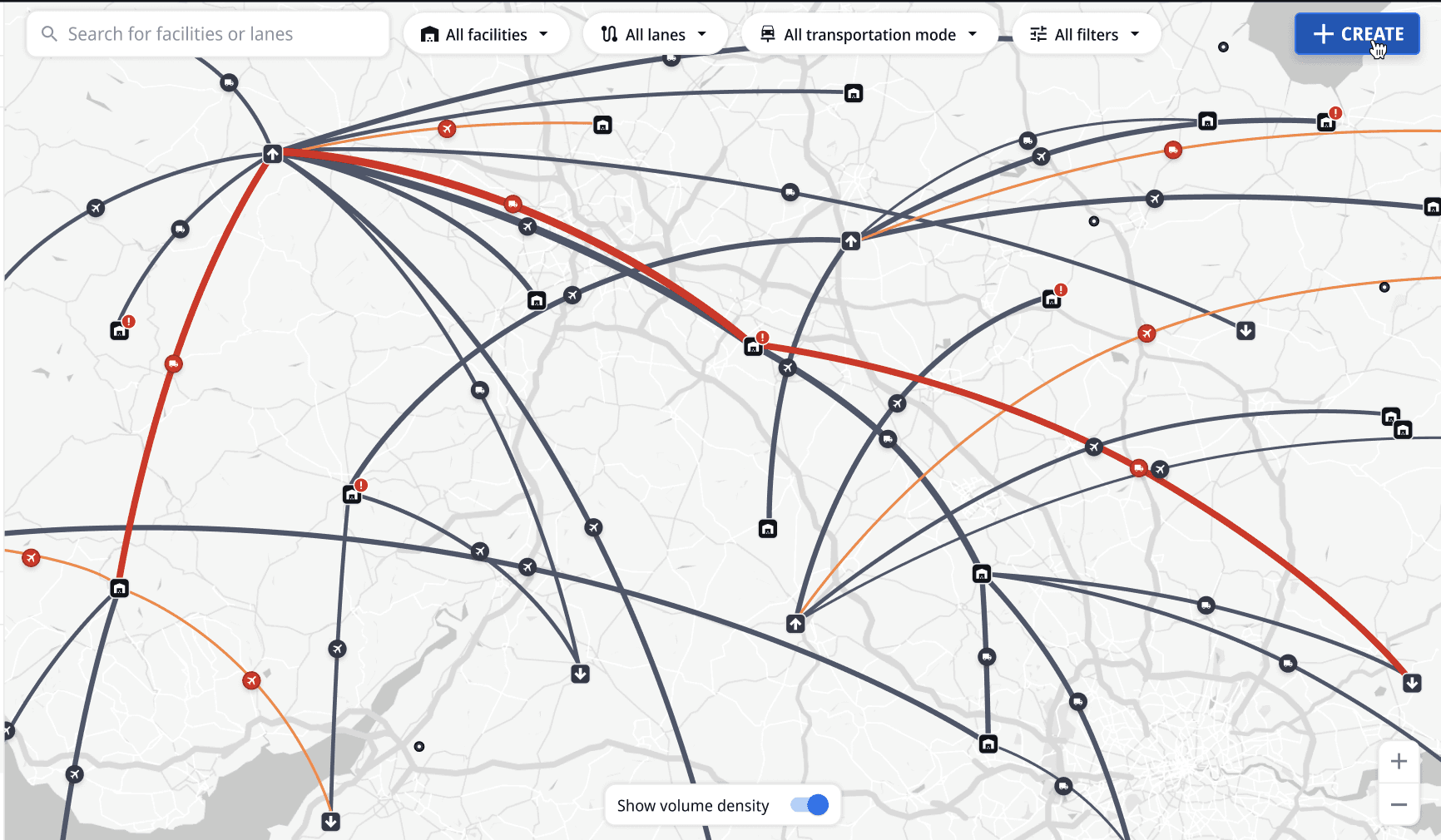
The network planning system visualizes the entire logistics infrastructure as a connected graph of facilities and transportation lanes. Each facility represents a node in the network — such as fulfillment centers, cross-docks, sort centers, or linehaul hubs — while the connecting routes represent transportation lanes between them.
This visualization allows planners to understand how shipments flow through the network and identify critical routing paths between facilities. Instead of managing logistics operations through static spreadsheets or isolated planning tools, the system provides a unified map of the operational network.
By representing the logistics infrastructure as an interconnected system, operations teams can quickly analyze the reach of each facility, evaluate routing options between nodes, and detect potential bottlenecks in the transportation layer.
This network-level visibility forms the foundation for capacity planning, routing optimization, and long-term infrastructure planning.
Network Node Architecture
The logistics network is modeled as a graph of interconnected operational nodes, where each node represents a physical processing facility such as a fulfillment center, sort center, cross-dock, or last-mile hub. Orders move across this network through defined transportation lanes that connect these facilities.
Each node in the network has clearly defined operational properties, including processing capacity, handling time, dispatch cutoffs, and service coverage. These attributes determine how orders can flow through the system and which fulfillment paths remain feasible under operational constraints.
By structuring the logistics infrastructure as a node-based network architecture, the system allows planners to analyze how shipments move across facilities and identify the optimal routing paths between origin and destination nodes.
This architectural model forms the foundation for capacity planning, routing optimization, and fulfillment feasibility checks used across the logistics platform.
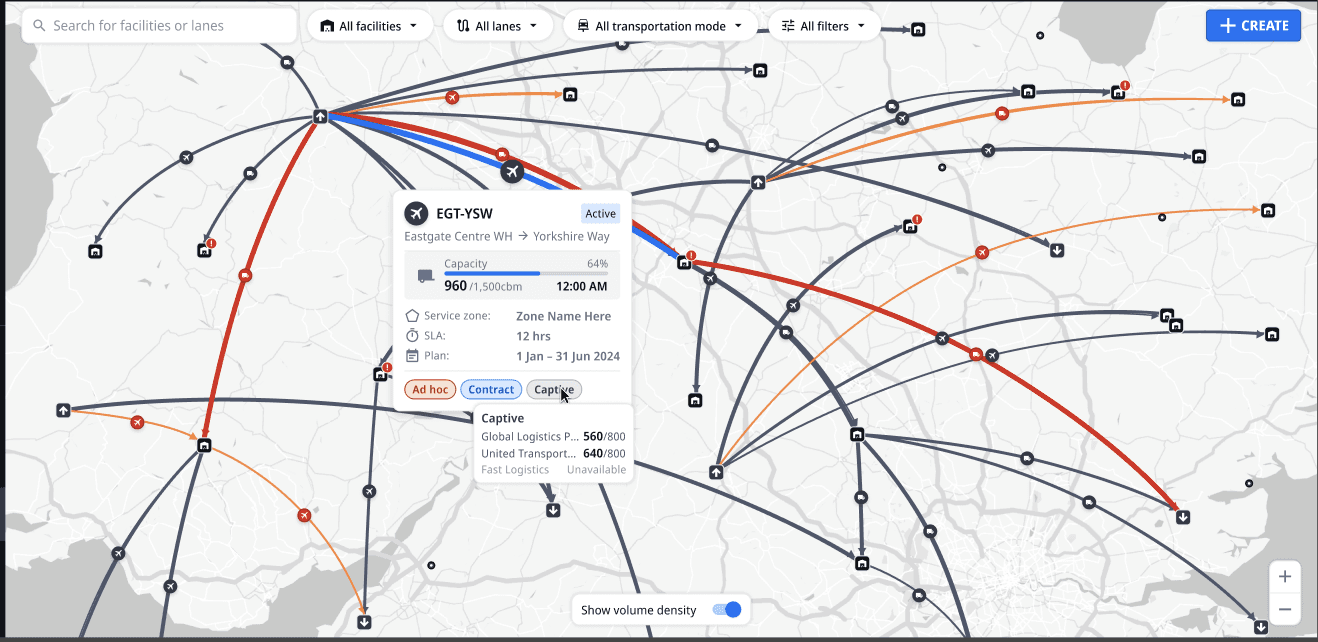
Capacity Utilisation Modeling
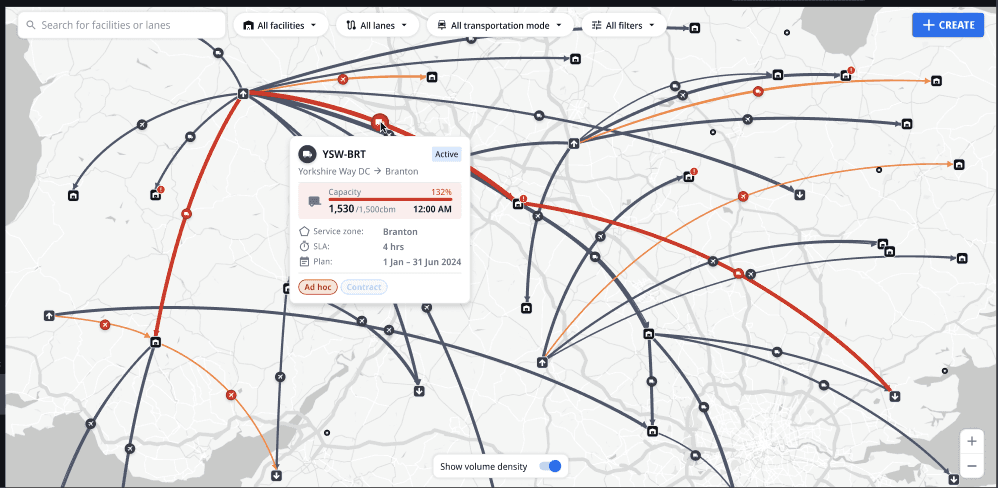
Each facility and transportation lane in the logistics network operates under defined capacity constraints. Warehouses have limits on how many orders they can process within a time window, while transportation lanes have vehicle capacity and dispatch frequency constraints.
The capacity modeling layer continuously tracks the utilization of these resources to ensure that the planned flow of shipments remains within operational limits. By monitoring utilization levels across nodes and lanes, the system helps planners detect bottlenecks before they impact service levels.
This allows operations teams to proactively rebalance flows across alternative facilities, adjust dispatch schedules, or introduce additional transportation capacity when required.
By embedding capacity constraints directly into the planning system, the logistics network can scale while maintaining operational stability and predictable service performance.
Demand vs Throughput Simulation
Logistics networks must continuously adapt to fluctuations in order demand. Seasonal spikes, regional promotions, and market growth can significantly increase the load on existing infrastructure.
To prepare for these variations, the system includes simulation capabilities that model how projected demand flows through the logistics network. By comparing expected order volume with available processing and transportation capacity, planners can evaluate whether the current network can support the anticipated throughput.
These simulations allow operations teams to test different infrastructure strategies — such as opening new facilities, adjusting routing policies, or increasing transportation capacity — before implementing them in production.
By modeling demand and throughput at the network level, organizations can make more informed long-term planning decisions and ensure that the logistics infrastructure evolves alongside business growth.